
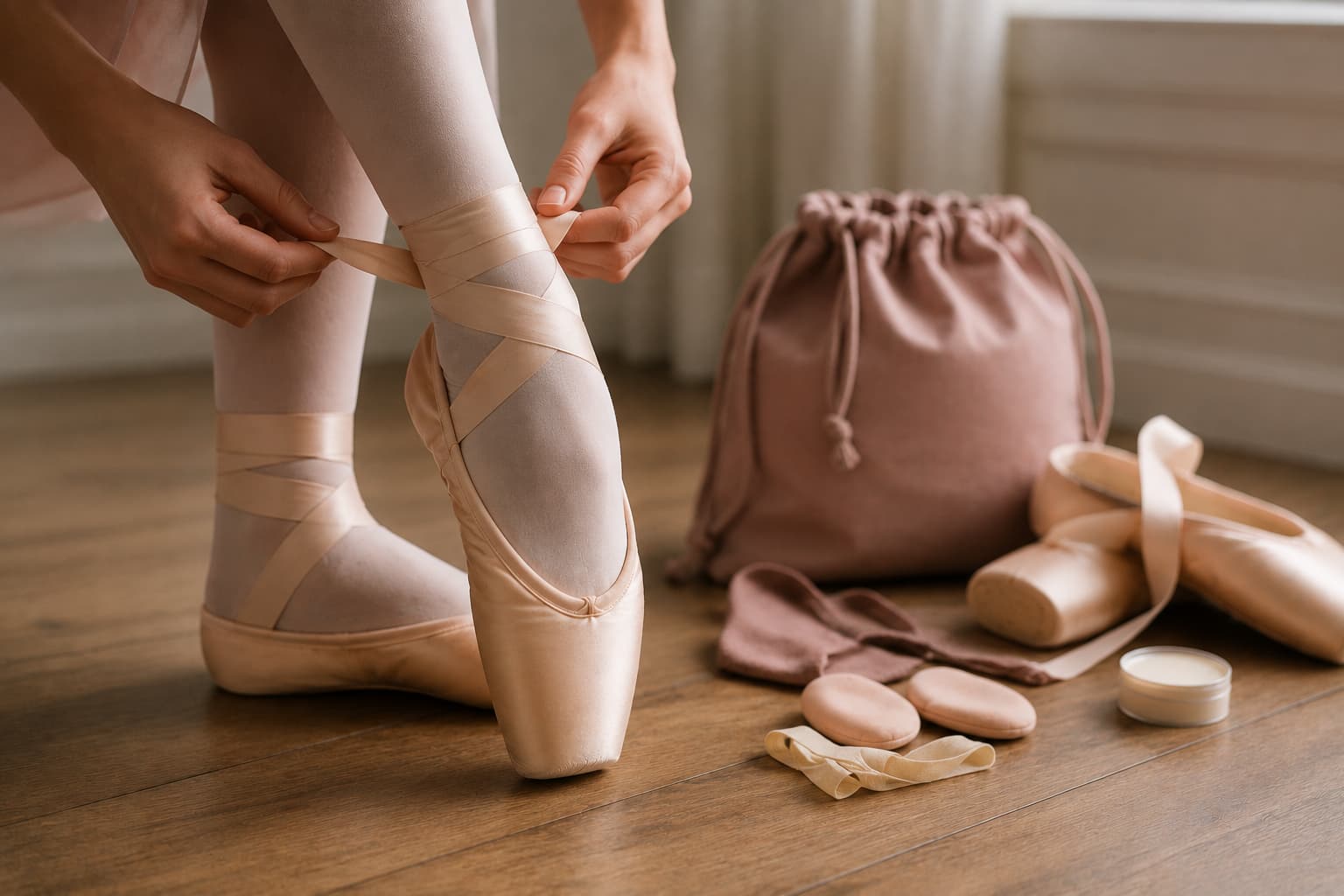
Good pointe shoe care is about more than keeping shoes looking neat. Pointe shoes are designed to provide structure and support during demanding ballet movements, and repeated use, moisture, pressure, and normal wear can gradually change how they feel and perform. Learning how to dry, store, clean, inspect, and maintain pointe shoes can help dancers care for each pair and recognize when a shoe may no longer be providing the support they expect. As dancers progress, proper shoe care becomes part of their overall development alongside technique, strength, and regular training through our Ballet Classes for Kids in North Vancouver at Perform Art Studios.
Why Pointe Shoe Care Matters
Pointe shoes are different from ordinary footwear. Their structure includes components such as the box, platform, shank, satin upper, ribbons, elastics, and sole, all of which experience pressure during training.
Sweat and moisture can also affect the materials over time. Leaving damp shoes closed inside a dance bag, exposing them to direct heat, or continuing to dance in shoes that have noticeably lost their structure may shorten their usable life or affect how they feel during class.
A simple care routine can help dancers:
- allow shoes to dry properly between classes
- protect their shape during storage
- notice loose ribbons or elastics early
- monitor changes in the box and shank
- keep the shoes reasonably clean
- recognize when it may be time to discuss replacement with an instructor
Pointe Shoes Preparation Before the First Wear
Proper pointe shoes preparation should begin before the first class.
A new pair should be professionally fitted and appropriate for the dancer’s foot, training level, and instructor’s requirements. Pointe shoes should not be selected simply because another dancer wears the same brand or model.
Before wearing a new pair, dancers may also need to prepare ribbons and elastics according to their studio or teacher’s instructions.
This can include:
- sewing ribbons securely
- attaching elastics in the recommended position
- checking that stitching is secure
- confirming the fit with the instructor
- identifying each shoe if the dancer consistently wears one on the same foot
Some dancers use specific techniques to soften or shape their shoes, but aggressive bending, crushing, cutting, or altering the box or shank without guidance is not a good general recommendation.
A preparation method that works for one dancer may not be suitable for another.
How to Dry Pointe Shoes After Class
One of the simplest and most useful habits is taking pointe shoes out of the dance bag after class.
Shoes that remain closed inside a bag may stay damp for longer, especially after an intensive lesson.
After class:
- remove the pointe shoes from the dance bag
- take out removable toe pads or other accessories
- open the shoes so air can circulate
- allow them to dry naturally in a well-ventilated area
- keep them away from direct heat
Avoid putting pointe shoes directly on a radiator, beside a heater, or in a dryer.
High heat may affect the materials and structure of the shoe.
Even when another class is coming up soon, giving the shoes as much drying time as possible between uses is a useful habit.
How to Store Pointe Shoes Properly
Once dry, pointe shoes should be stored somewhere that protects them without trapping unnecessary moisture.
A breathable shoe bag can be more appropriate than keeping damp shoes sealed in plastic or buried at the bottom of a tightly packed dance bag.
When storing pointe shoes:
- make sure they are dry first
- avoid crushing them under heavy items
- keep the ribbons organized rather than pulling on them
- store them away from direct heat
- choose a dry, ventilated location
- avoid leaving them in a hot car for long periods
The goal is not to keep the shoes looking brand new. It is to avoid unnecessary damage between classes.
How to Clean Ballet Pointe Shoes
Pointe shoes can become marked during regular studio use, but cleaning needs to be gentle because many traditional pointe shoes contain materials that should not be soaked.
For light surface marks, dancers can start with a soft, slightly damp cloth and gently wipe the affected area.
If additional cleaning is needed, follow the care instructions provided by the shoe manufacturer or retailer.
In general:
- remove loose surface dirt gently
- use as little moisture as possible
- spot-clean rather than soaking the entire shoe
- avoid placing pointe shoes in a washing machine
- do not put them in a tumble dryer
- allow them to air-dry completely before wearing them again
Avoid aggressively scrubbing satin, as this can affect its appearance or damage the surface.
The sole may also need a different cleaning approach from the satin upper, so it is better not to treat the entire shoe with the same product automatically.
Most importantly, cleaning should never compromise the structure of the shoe just to make it look newer.
Pointe Shoe Maintenance Between Classes
Regular pointe shoe maintenance does not have to be complicated.
Before class, take a moment to inspect the shoes and notice whether anything has changed.
Check:
- the box
- the platform
- the shank
- the sole
- ribbons
- elastics
- stitching
- the overall fit and feel
Loose stitching around a ribbon or elastic is easier to address before it becomes a bigger problem.
Dancers should also pay attention to how the shoe feels compared with previous classes. A visible problem is not always the first sign that a pair is changing.
Continue Developing Your Ballet Training
Explore ballet training at Perform Art Studios and find a program suited to your dancer’s age, experience, and current level.
Pointe Shoe Repair: What Can Be Fixed?
When discussing pointe shoe repair, it is important to distinguish between minor maintenance and structural wear.
Some small issues may be manageable, such as:
- resewing a loose ribbon
- replacing worn elastic
- reinforcing secure stitching where appropriate
However, repairing stitching is very different from trying to restore a pointe shoe whose main support structure has deteriorated.
A dancer should not assume that a structurally worn shoe can simply be repaired and used as if it were new.
If the box has significantly softened or collapsed, the shank has weakened or changed noticeably, or the shoe no longer feels supportive in the way it normally does, the dancer should speak with their instructor.
When in doubt, appropriate support should take priority over extending the life of a worn pair.
Signs Pointe Shoes May Need Replacing
There is no single replacement schedule that applies to every dancer.
How long a pair lasts can depend on factors such as:
- training frequency
- length and intensity of classes
- dancer technique
- foot characteristics
- shoe model
- moisture
- how the shoes are cared for
- whether multiple pairs are rotated
Instead of relying only on a certain number of weeks or hours, dancers should pay attention to changes in the shoes.
Possible signs that a pair should be assessed include:
- the box feels noticeably softer or less supportive
- the shank no longer feels the way it did when properly fitted
- the platform has changed significantly
- the shoe feels unstable
- structural wear is visible
- the dancer feels that the normal support has changed
- the instructor recommends replacing the pair
Dancers should tell their teacher when a shoe begins to feel significantly different instead of trying to compensate by changing their technique.
Should You Rotate Between Two Pairs of Pointe Shoes?
Some dancers who train frequently use more than one pair of pointe shoes.
Rotating pairs may allow each pair additional time to dry between classes.
However, this does not automatically mean every dancer needs multiple pairs.
Whether rotation makes sense can depend on:
- frequency of training
- shoe fit
- level of training
- instructor recommendations
- how quickly the dancer’s shoes wear
If multiple pairs are being used, each pair should still be checked regularly rather than assuming rotation prevents wear.
Common Pointe Shoe Care Mistakes
Even small habits can affect how pointe shoes are maintained.
Some common mistakes include:
Leaving Damp Shoes Inside the Dance Bag
Shoes need a chance to dry after training.
Using Direct Heat to Dry Them Faster
A heater or dryer may damage materials rather than simply speeding up drying.
Soaking or Machine-Washing Pointe Shoes
Pointe shoes are not ordinary fabric shoes and should not generally be treated like machine-washable footwear.
Ignoring Loose Ribbons or Elastics
Small stitching issues should be addressed before they become more significant.
Trying to Repair Structural Wear
A weakened box or shank is different from a loose ribbon.
Copying Another Dancer’s Shoe Preparation
Feet, shoes, technique, and fitting needs vary between dancers.
Wearing Shoes That No Longer Feel Supportive
Extending the life of a pair should never be more important than appropriate support.
Pointe Shoes Tips for Young Dancers
These simple pointe shoes tips can make shoe care easier to remember:
- take your shoes out of your bag after class
- let them air-dry completely
- keep them away from direct heat
- inspect ribbons and elastics regularly
- check the box, platform, and shank for changes
- store dry shoes in a breathable space
- clean only as gently as necessary
- do not copy aggressive breaking-in methods from other dancers
- tell your instructor if your shoes start to feel different
- replace structurally worn shoes rather than trying to make them last indefinitely
A consistent routine is usually more useful than complicated care tricks.
Caring for Ribbons and Elastics
Ribbons and elastics are small parts of the shoe, but they need regular attention.
Before class, check whether:
- stitching is coming loose
- elastic has stretched significantly
- ribbon edges are fraying excessively
- the attachment points still feel secure
If a ribbon or elastic needs to be replaced, follow your instructor’s guidance about placement.
Avoid waiting until something is nearly detached before repairing it.
Should Pointe Shoes Be Washed?
Traditional pointe shoes generally should not be soaked or machine-washed.
Water can affect the materials used in the shoe’s structure, and complete immersion may change how the shoe performs or fits.
If appearance is the concern, gentle spot-cleaning is usually a more appropriate starting point.
Always check the manufacturer’s care instructions for the specific shoe, since construction and materials can vary.
Can You Make Pointe Shoes Last Longer?
Good care may help dancers avoid unnecessary deterioration, but pointe shoes are still working dance equipment and eventually wear out.
Useful habits include:
- drying them after every class
- storing them correctly
- addressing minor stitching problems early
- avoiding unnecessary moisture
- avoiding extreme heat
- monitoring structural changes
- rotating pairs when appropriate for the dancer’s training schedule
The goal of pointe shoe care should not be to keep one pair indefinitely. It should be to care for the shoes properly while they remain suitable for use.
Ballet Training at Perform Art Studios
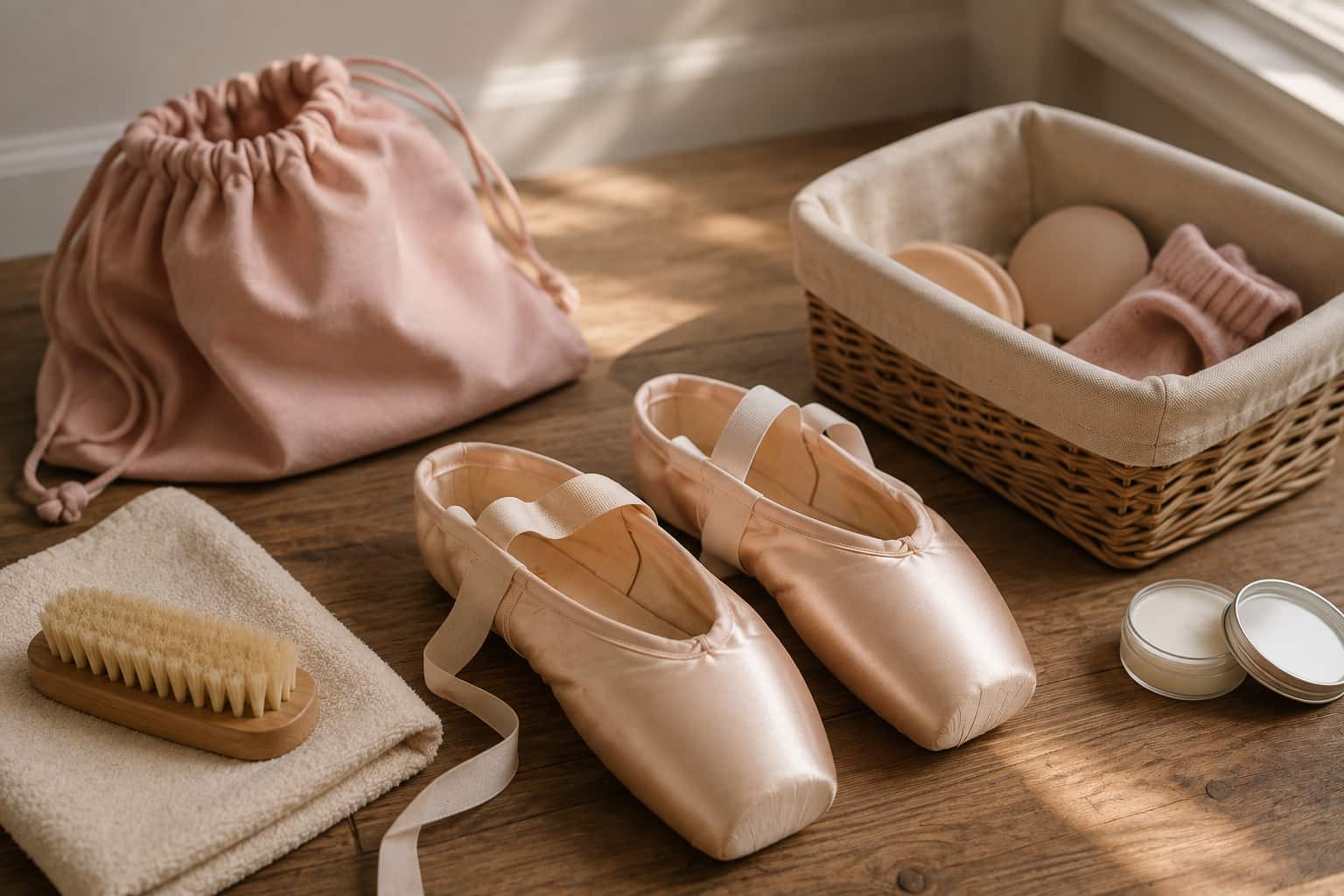
As dancers progress in ballet, strength, alignment, control, technique, and consistent instruction all become increasingly important.
Perform Art Studios offers ballet training for young dancers at different stages of their development, helping students build strong foundations and progress into more advanced training when they are ready.
Good shoe habits can support that progress, but dancers should continue to follow their instructor’s guidance when preparing, maintaining, or replacing their ballet shoes.
Conclusion
Good pointe shoe care comes down to a few consistent habits: prepare new shoes appropriately, allow them to dry after class, store them carefully, clean them gently, inspect them regularly, and recognize when structural wear means a pair may need to be replaced. Minor maintenance such as ribbon or elastic stitching can often be addressed early, but dancers should not rely on DIY repairs to restore the support of a worn box or shank. With appropriate instruction and careful shoe habits, young dancers can focus on developing their technique while taking responsible care of the equipment they use for ballet. Perform Art Studios supports young dancers as they build their skills and progress through their ballet training.
Frequently Asked Questions
Take them out of the dance bag, remove removable accessories such as toe pads, and allow the shoes to air-dry naturally in a well-ventilated area before storing them.
Store them only after they are dry, preferably somewhere breathable and protected from heavy objects, excessive moisture, and direct heat.
Traditional pointe shoes generally should not be soaked or machine-washed. Light spot-cleaning with minimal moisture may be appropriate, depending on the manufacturer’s care instructions.
Changes such as a significantly softened box, weakened shank, altered platform, visible structural wear, or a noticeable loss of normal support may indicate that the shoes should be assessed or replaced.
Minor issues such as loose ribbon or elastic stitching may be repairable. Structural deterioration of the box or shank should not be treated as a simple repair, and dancers should ask their instructor if the shoe no longer feels supportive.
Yes. Allowing pointe shoes to air-dry after class is a useful care habit because it prevents them from remaining damp inside a closed dance bag.
There is no universal lifespan. How quickly pointe shoes wear depends on the dancer, training frequency, shoe model, technique, moisture, and other factors. The condition and support of the shoe are more useful indicators than a fixed timeline.