
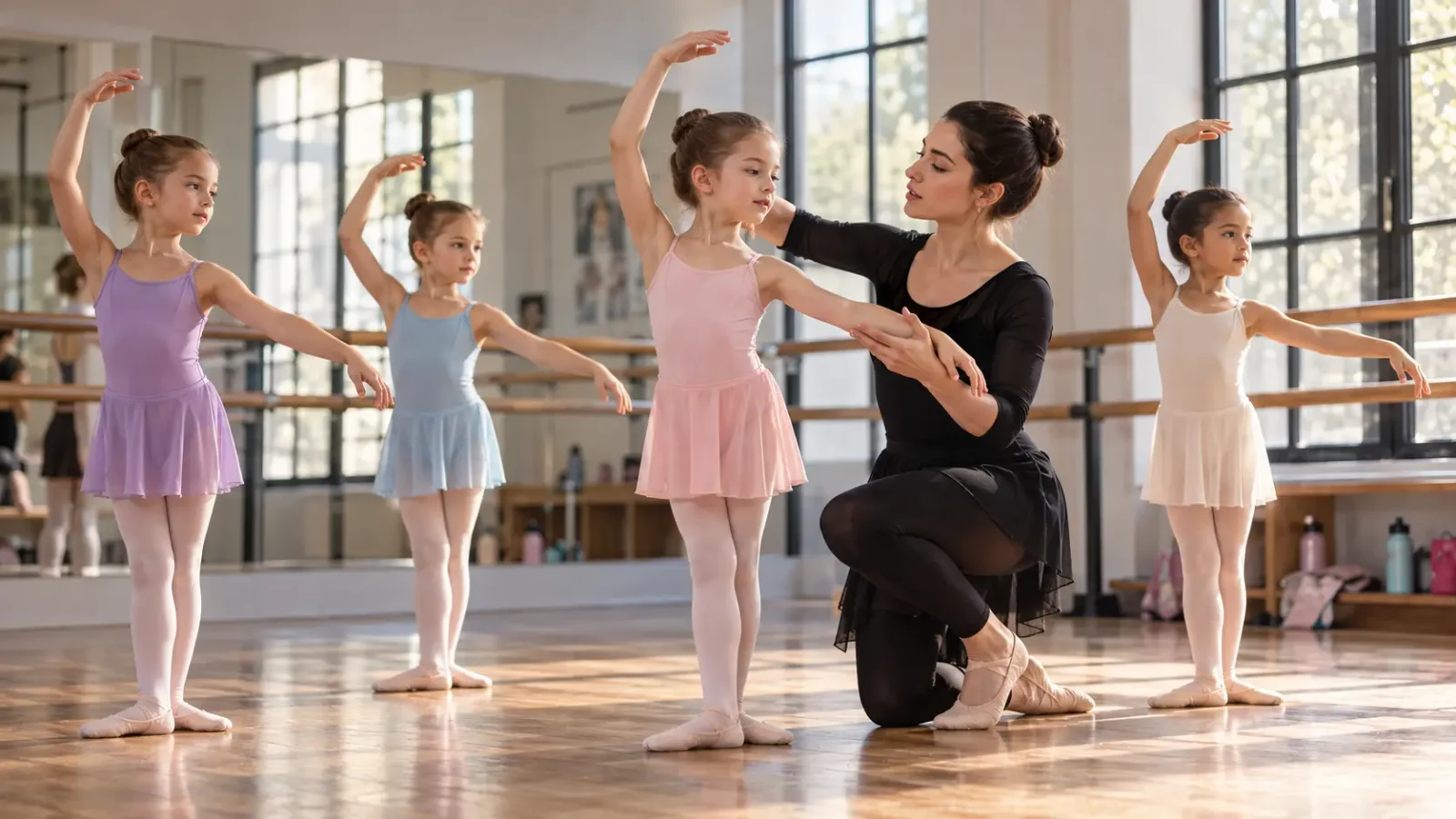
Ever wondered why some ballet dancers seem to improve faster than others, even when they practice just as often? The secret isn’t always more practice, but knowing exactly what to work on and how to do it correctly. If you’re wondering how to improve ballet skills, focusing on technique, balance, strength, and consistency can make a real difference. At Perform Art Studios, we believe that building a strong foundation through structured training, including our kids ballet classes, is essential for developing confident and graceful dancers. In this guide, you’ll discover 12 practical tips, effective exercises, and common mistakes to avoid so you can make every practice session count.
Every Great Ballet Dancer Starts with the Basics
Give your child the opportunity to develop balance, coordination, and confidence through engaging ballet classes at Perform Art Studios.
What Skills Do You Need to Improve in Ballet?
Becoming a better ballet dancer isn’t just about learning more complicated steps. It’s about developing several essential skills that work together to make your movements more controlled, precise, and graceful. Whether you’re just starting out or have been dancing for years, these are the key areas to focus on:
- Technique: Mastering proper body alignment, foot placement, turnout, and fundamental ballet movements.
- Balance: Maintaining stability and control during poses, transitions, turns, and movements on one leg.
- Strength: Building the core, leg, foot, and ankle strength needed for controlled movements and better stability.
- Flexibility: Developing a comfortable range of motion that supports proper technique without forcing your joints or muscles.
- Coordination: Learning to move your arms, legs, head, and upper body smoothly together.
- Musicality: Understanding rhythm, timing, and musical expression to make your dancing more fluid and expressive.
Improving these skills together creates a stronger foundation for more advanced ballet movements. The following tips will show you how to develop each one through focused practice.
12 Practical Tips to Improve Your Ballet Skills
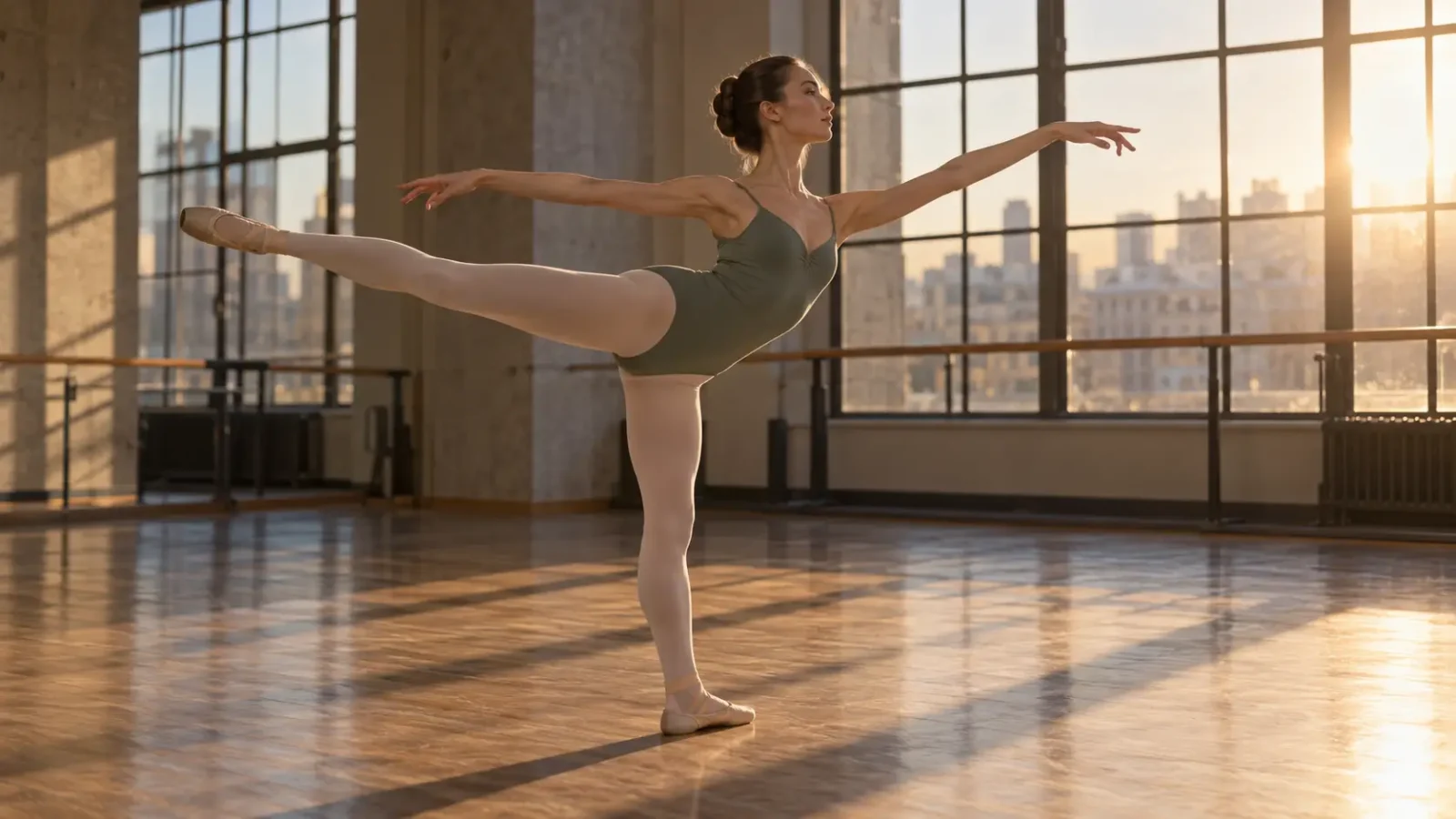
Improving your ballet technique starts with mastering the fundamentals and gradually developing the strength, control, and coordination needed for more advanced movements. The following 12 tips will help you identify areas for improvement, practice more effectively, and build better habits in every ballet class.
1. Master the Basic Ballet Positions and Movements
Even experienced ballet dancers regularly return to the basics because every advanced movement builds on fundamental techniques. Mastering the five basic ballet positions, along with movements such as pliés, tendus, and dégagés, helps you develop better alignment, coordination, and muscle control.
To strengthen your foundation:
- Practice the five basic foot positions while maintaining proper posture and alignment.
- Perform slow pliés, keeping your knees aligned with your toes.
- Practice tendus to improve foot articulation and control.
- Work on ballet dégagé technique to develop sharper, more precise leg and foot movements.
- Focus on executing each movement correctly before increasing speed or complexity.
Remember, performing simple movements with precision is far more valuable than rushing into advanced combinations with incorrect technique.
2. Improve Your Posture and Body Alignment
Good posture is the foundation of almost every ballet movement. Proper body alignment helps you maintain balance, move more efficiently, and execute steps with greater control. When your head, shoulders, spine, hips, and legs are correctly aligned, even simple movements can look more graceful and polished.
To improve your ballet posture:
- Engage your core: Gently activate your abdominal muscles to support your spine without holding your breath.
- Keep your shoulders relaxed: Avoid lifting or tensing your shoulders while maintaining an open chest.
- Lengthen your spine: Imagine a string gently pulling the top of your head upward.
- Maintain proper hip alignment: Keep your pelvis in a neutral position rather than excessively arching or tucking your lower back.
- Check your posture in a mirror: Practice basic positions slowly to identify and correct alignment issues.
Try maintaining proper alignment during everyday movements, not just ballet exercises. Developing greater body awareness will make it easier to maintain good posture throughout your dance combinations.
3. Build Core Strength for Better Stability
A strong core is essential for maintaining balance, controlling movements, and keeping your body stable during ballet. Your core muscles, including your abdominals, back, and deep stabilizing muscles, support proper alignment and help you perform turns, extensions, and transitions with greater precision.
To improve your core strength for ballet:
- Practice planks: Hold a plank for 15 to 30 seconds while keeping your spine neutral and your abdominal muscles engaged.
- Try dead bugs: Lie on your back and slowly extend opposite arms and legs while keeping your lower back stable.
- Perform controlled leg lifts: Strengthen your abdominal muscles and hip stabilizers by lifting and lowering your legs slowly without arching your back.
- Focus on core engagement during barre exercises: Maintain gentle abdominal support while performing pliés, tendus, and other fundamental movements.
- Prioritize control over repetitions: Perform each exercise slowly and correctly rather than rushing through multiple sets.
Remember that core strength in ballet isn’t about keeping your muscles tense all the time. It’s about developing the ability to activate the right muscles when needed while maintaining natural breathing and fluid movements.
4. Strengthen Your Feet and Ankles
Strong feet and ankles are essential for maintaining balance, executing precise footwork, and moving smoothly between ballet positions. They provide the stability needed for movements such as relevés, jumps, and turns while helping you maintain control during landings and transitions.
To improve foot and ankle strength for ballet:
- Practice slow relevés: Rise onto the balls of your feet, hold briefly, and lower your heels with control while keeping your ankles aligned.
- Improve foot articulation: Slowly point and flex your feet, focusing on controlled movement through the ankle, arch, and toes.
- Try resistance band exercises: Use a light resistance band to strengthen the muscles that support ankle movement and stability.
- Practice single-leg balance: Stand on one leg for 15–30 seconds, maintaining proper alignment without gripping your toes.
- Focus on controlled landings: When practicing small jumps in class, land softly through your feet with your knees aligned over your toes.
Start with a few controlled repetitions and gradually increase the difficulty as your strength improves. Avoid forcing your arches or rolling your ankles outward, as proper alignment is more important than achieving a higher relevé.
5. Improve Your Balance and Control
Balance is one of the most important skills in ballet, especially when performing turns, arabesques, and movements on one leg. Good balance isn’t just about staying still. It requires coordination between your core muscles, supporting leg, and upper body to maintain stability while moving gracefully.
To improve your balance in ballet:
- Practice single-leg stands: Stand on one leg for 15–30 seconds while keeping your hips level and your core engaged.
- Use a fixed focal point: Focus your eyes on a stationary object to help maintain stability during balancing exercises.
- Try slow relevés: Rise onto the balls of your feet, hold your balance briefly, and lower your heels without rushing.
- Practice passé positions: Lift one foot to the supporting leg’s knee area, maintaining proper alignment and avoiding unnecessary hip movement.
- Reduce barre support gradually: Start with light support from the barre and gradually challenge yourself to balance independently when you feel ready.
For better results, practice balancing on both legs, even if one side feels noticeably stronger. Focus on maintaining proper alignment rather than holding a position for as long as possible. Consistent, controlled practice will gradually help you develop the stability needed for more advanced ballet movements.
6. Develop Flexibility Safely
Flexibility plays an important role in ballet, allowing dancers to perform movements such as arabesques, développés, and leg extensions with greater ease and control. However, improving flexibility isn’t about stretching as far as possible. The goal is to develop a healthy range of motion while maintaining the strength and stability needed to control your movements.
To improve your flexibility for ballet:
- Warm up before stretching: Start with 5–10 minutes of gentle movement to increase blood flow and prepare your muscles.
- Practice dynamic stretches: Use controlled leg swings and gentle movements before dancing to gradually increase your range of motion.
- Focus on key muscle groups: Stretch your hip flexors, hamstrings, calves, and inner thighs to support common ballet movements.
- Include static stretches after practice: Hold comfortable stretches for approximately 20–30 seconds without bouncing or forcing the position.
- Combine flexibility with strength: Practice controlled leg lifts to improve your ability to use your range of motion during ballet movements.
Never force your body into splits or extreme positions, especially if you experience pain or discomfort. Progress gradually, respect your natural joint mobility, and follow your instructor’s guidance to develop flexibility safely.
7. Work on Proper Turnout Technique
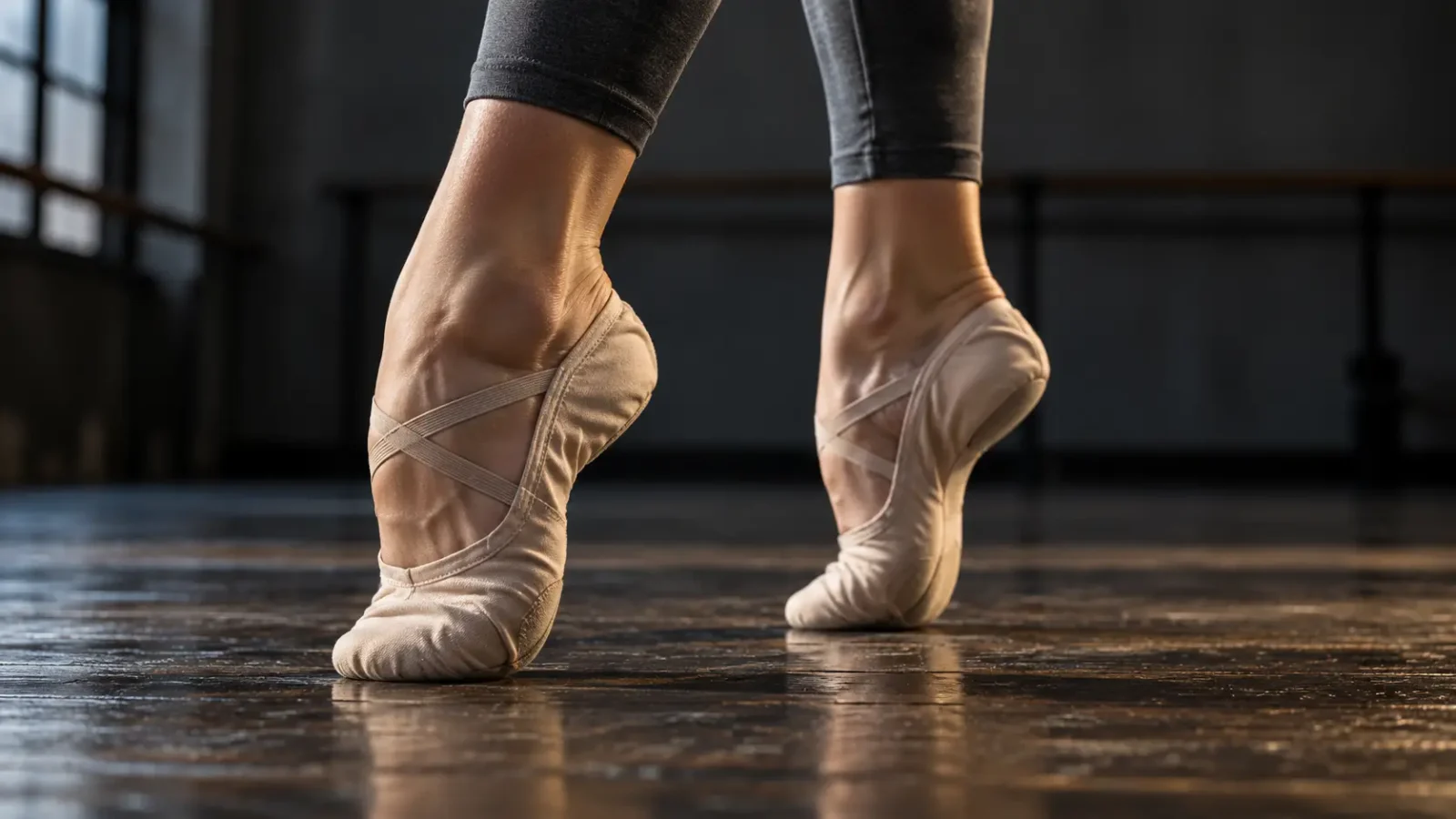
Turnout is a fundamental part of ballet technique that involves rotating your legs outward from the hip joints. Proper turnout helps you maintain alignment, execute movements more efficiently, and develop greater control during positions, turns, and transitions. However, forcing your feet outward beyond your natural range of motion can place unnecessary stress on your knees and ankles.
To improve your turnout in ballet:
- Rotate from your hips: Focus on gently rotating your thighs outward from the hip joints rather than twisting your knees or feet.
- Strengthen your hip muscles: Practice controlled exercises such as clamshells and side-lying leg rotations to develop the muscles that support turnout.
- Maintain proper knee alignment: Keep your knees pointing in the same direction as your toes during pliés and other ballet movements.
- Practice turnout in basic positions: Work on maintaining comfortable, controlled turnout in first and second positions before progressing to more challenging movements.
- Avoid forcing your feet outward: Never push your feet into a wider angle than your hips can comfortably support.
Remember, effective turnout is about control and proper alignment, not achieving a perfect 180-degree position. Working within your natural range of motion while gradually improving strength and coordination will help you develop safer, more consistent ballet technique.
8. Practice Turns and Spotting
Turning is one of the most challenging aspects of ballet because it requires balance, coordination, strength, and precise timing. Whether you’re learning basic pirouettes or working on more advanced turns, developing proper spotting technique can help you maintain orientation and improve your control throughout each rotation.
To improve your ballet turns:
- Master your preparation: Start each turn with proper alignment, an engaged core, and a stable supporting leg.
- Practice spotting: Focus on a fixed point at eye level, keeping your gaze on it as long as possible before quickly turning your head to find it again.
- Start with quarter and half turns: Build confidence and coordination through smaller rotations before attempting full pirouettes.
- Control your arms: Keep your arms in a consistent, rounded position to avoid unnecessary movements that could affect your balance.
- Focus on your landing: Finish each turn with control, maintaining proper posture instead of stepping out of the movement abruptly.
Practice slowly before increasing the number or speed of your rotations. A single controlled pirouette with proper technique is more valuable than multiple turns performed without balance or alignment.
9. Improve Your Coordination and Musicality
Ballet is more than a series of technical movements. It’s also about connecting your movements to music and coordinating different parts of your body. Developing musicality helps you understand rhythm, recognize changes in tempo, and express the character of the music through your dancing.
To improve your coordination and musicality:
- Listen to ballet music regularly: Familiarize yourself with different rhythms, tempos, and musical phrases.
- Practice counting the beats: Learn to recognize common musical counts, such as groups of eight, and match your movements to the rhythm.
- Coordinate your arms and legs: Practice simple combinations slowly, focusing on how your port de bras connects with your footwork.
- Pay attention to musical accents: Use changes in rhythm and emphasis to add expression and precision to your movements.
- Practice without music first: When learning a difficult combination, master the movement sequence slowly before adding musical timing.
Try performing the same simple ballet combination with different musical tempos. This exercise can help you become more adaptable, improve your timing, and develop a more natural connection between movement and music.
10. Make Barre Exercises Part of Your Routine
Barre exercises are an essential part of ballet training because they allow dancers to develop strength, alignment, and technical precision with additional support. Regular barre practice helps reinforce correct movement patterns and prepares your body for more challenging center-floor exercises.
To get the most out of barre training:
- Start with basic movements: Practice pliés, tendus, dégagés, and rond de jambe to develop control and proper placement.
- Use the barre for support, not dependence: Rest your hand lightly on the barre instead of gripping it or leaning your weight onto it.
- Focus on alignment: Keep your shoulders level, pelvis stable, and supporting leg properly aligned throughout each exercise.
- Practice both sides equally: Repeat exercises on your right and left sides to develop balanced strength and coordination.
- Pay attention to transitions: Move smoothly between positions rather than focusing only on the beginning and end of each exercise.
Consistency is more important than rushing through complex combinations. Even a short, focused barre routine can help reinforce fundamental ballet skills when performed correctly under appropriate guidance.
11. Focus on Precision Before Speed
One of the most common mistakes ballet students make is trying to perform movements faster or more impressively before mastering the correct technique. While speed and complexity are important in advanced ballet, precision is what makes movements look effortless and controlled.
To develop greater precision in ballet:
- Slow down difficult combinations: Break complex sequences into smaller movements and practice each part carefully.
- Pay attention to foot placement: Make sure your feet move through the correct positions during transitions.
- Complete every movement: Fully extend your legs and arms when appropriate instead of rushing into the next step.
- Use a mirror thoughtfully: Observe your alignment and technique, but also develop awareness of how correct movements feel.
- Increase speed gradually: Once you can perform a combination consistently with proper technique, slowly bring it up to the intended tempo.
Practicing movements slowly allows you to recognize mistakes that may go unnoticed at full speed. Over time, this attention to detail helps you build the muscle coordination needed to execute faster combinations without sacrificing technique.
12. Get Regular Feedback From Your Ballet Instructor
Even with consistent practice, it can be difficult to recognize your own technical mistakes. An experienced ballet instructor can identify issues with your alignment, movement patterns, and coordination that might otherwise go unnoticed. Regular feedback helps you correct these habits early and make your training more effective.
To benefit from your instructor’s feedback:
- Ask specific questions: Instead of simply asking how you’re doing, request feedback on particular movements, positions, or techniques.
- Apply corrections immediately: When your instructor suggests an adjustment, practice it carefully to understand how it changes your movement.
- Keep a practice journal: Write down important corrections and exercises you want to focus on between classes.
- Track your progress over time: With your instructor’s permission, record short practice videos to compare your technique and identify improvements.
- Be patient with corrections: Technical changes often require repeated practice before they become natural.
Remember that improvement in ballet isn’t always measured by learning new movements. Sometimes, the most meaningful progress comes from refining a familiar step, improving your alignment, or gaining better control over your body. With consistent practice and professional guidance, these small improvements gradually lead to stronger overall ballet technique.
Take Your Ballet Skills to the Next Level
Turn consistent practice into meaningful progress. At Perform Art Studios, our ballet classes help young dancers strengthen their technique, refine their movements, and grow with professional guidance.
Conclusion: How to Improve Ballet Skills with Consistent Practice
Learning how to improve ballet skills is a journey that requires patience, consistency, and attention to detail. By focusing on proper technique, strength, balance, and coordination, you can gradually develop greater confidence and control in every movement. Remember, meaningful progress comes from practicing correctly, not simply practicing more. At Perform Art Studios, our kids ballet classes provide a supportive environment where young dancers can build strong foundations, refine their technique, and grow their passion for ballet under professional guidance.
Frequently Asked Questions
Focus on mastering basic techniques, practicing consistently, and applying feedback from your instructor. Short, focused practice sessions that emphasize proper alignment, balance, and control are often more effective than rushing through advanced movements.
Yes! You can improve your ballet technique at home through basic exercises such as pliés, tendus, relevés, and gentle stretching. However, home practice should complement professional ballet classes, where an instructor can correct your technique and help prevent injuries.
Progress depends on your starting level, practice frequency, and training quality. Beginners may notice improvements in posture, coordination, and balance within a few weeks, while developing advanced techniques can take months or years of consistent training.
Both are essential. Flexibility allows you to achieve a comfortable range of motion, while strength helps you control your movements and maintain proper alignment. Developing both together is more effective than focusing on either one alone.