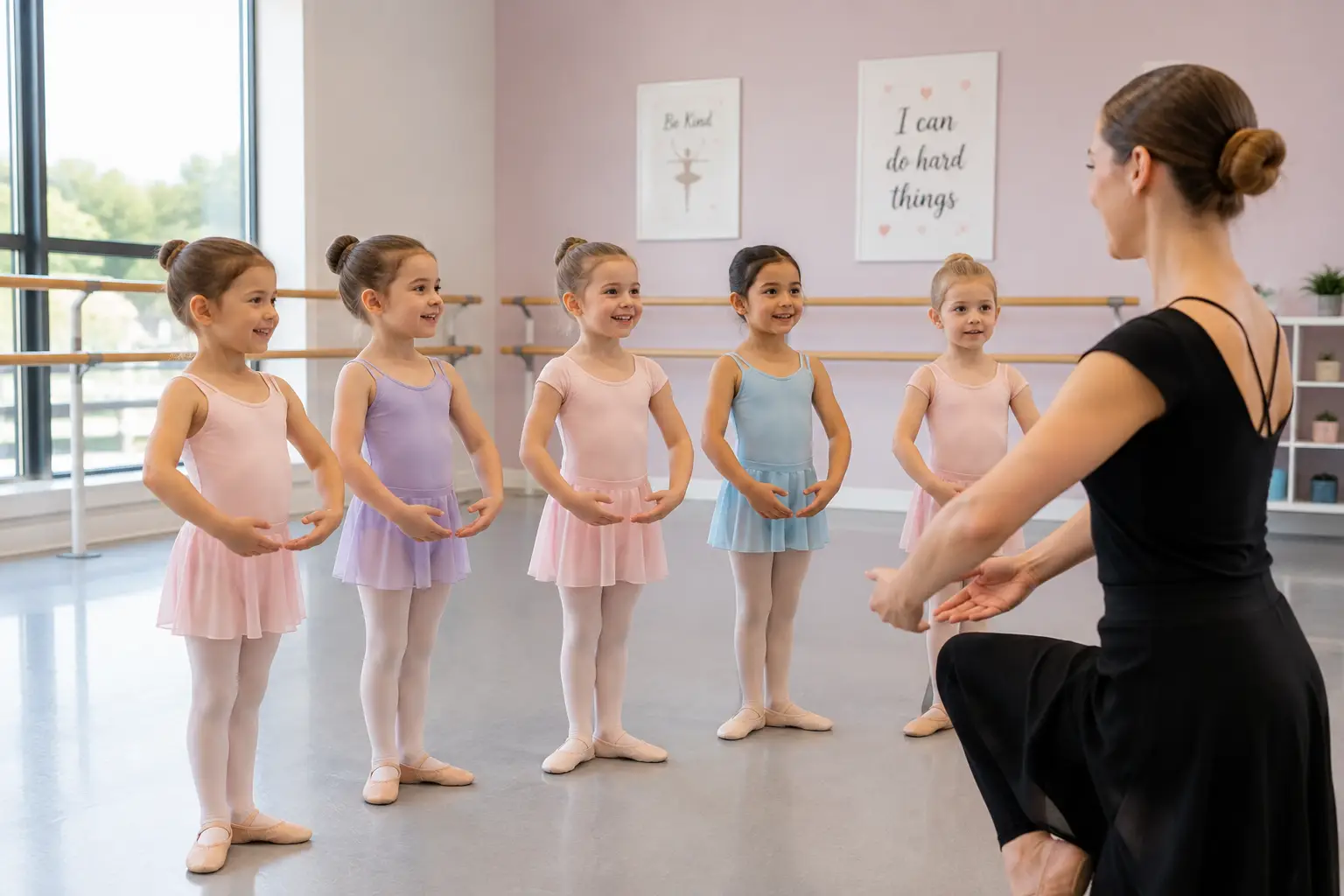
Learning how to start ballet can feel confusing when your child is completely new to dance. Parents may wonder what age is appropriate, whether previous dance experience is needed, what a beginner should wear, or what actually happens during the first lesson. The good news is that ballet does not begin with perfect technique or complicated choreography. It starts with learning basic movement, posture, coordination, musicality, and how to feel comfortable in a dance studio. Choosing an age-appropriate program is an important first step, and families can explore beginner ballet programs for children at Perform Art Studios to find an option that matches their child’s age and experience.
What Age to Start Ballet?
One of the most common questions from parents is what age to start ballet.
There is no single perfect age that applies to every child. The right starting point depends on age, physical development, attention span, confidence, and whether the child is ready to follow simple instructions in a group setting.
For younger children, ballet-inspired movement may focus more on:
- rhythm and music
- balance and coordination
- imaginative movement
- following simple directions
- learning how to move safely in a studio
- becoming comfortable dancing with others
As children get older, ballet can gradually become more structured, with greater attention to posture, positions, technique, and movement sequences.
Starting earlier does not automatically mean becoming a stronger dancer, and starting later does not mean a child has “missed their chance.” What matters more is beginning at an appropriate level with instruction that matches the dancer’s age and experience.
Does a Beginner Need Dance Experience?
No. A true beginner program should be designed for students who are still learning the foundations.
A child starting ballet for the first time should not be expected to already understand ballet terminology, positions, or choreography.
An instructor can introduce these concepts gradually, including:
- basic foot positions
- arm placement
- posture and alignment
- simple barre exercises
- balance
- coordination
- musical timing
- basic travelling movements
The goal at the beginning is not to perform everything perfectly. It is to become familiar with the way ballet movements are taught and build a foundation that can develop over time.
Ballet Dance for Beginners: What Do You Learn First?
Ballet dance for beginners usually starts with simple skills rather than dramatic jumps, turns, or advanced combinations.
Beginners often work on understanding how their body moves while maintaining controlled posture and balance.
Early ballet training may introduce concepts such as:
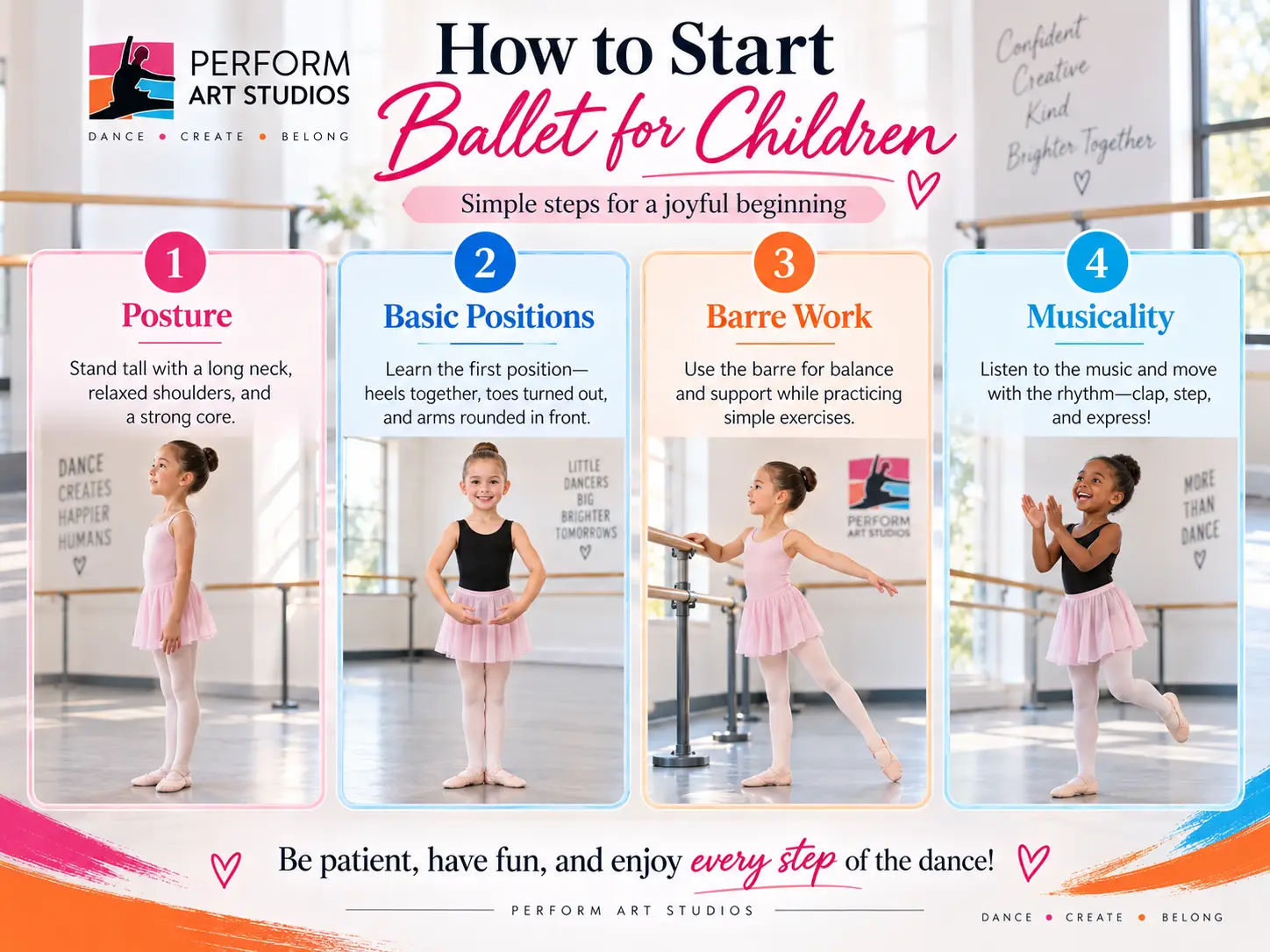
Posture and Alignment
Students begin learning how to stand with awareness of their head, shoulders, torso, hips, knees, and feet.
Good alignment is important because many ballet movements build on this basic body awareness.
Basic Positions
Beginners may gradually learn foundational positions of the feet and arms.
There is no need to memorize everything immediately. These positions become more familiar through repetition.
Barre Work
The ballet barre provides support while dancers practise movements, balance, posture, and controlled use of the legs and feet.
For a beginner, the barre can make new movements feel more manageable.
Musicality
Ballet is not only about movement. Students also learn to listen to music, recognize rhythm, and coordinate movement with timing.
Simple Centre Exercises
As confidence develops, dancers can practise movements away from the barre, helping them build balance, coordination, and spatial awareness.
How to Start Ballet Without Feeling Intimidated
For many beginners, the hardest part is simply walking into the studio for the first time.
It is normal not to know the terminology, where to stand, or what every movement means.
A supportive beginner environment should allow students to:
- watch demonstrations
- ask questions
- learn through repetition
- make mistakes
- progress at an appropriate pace
There is no reason to compare a first lesson with dancers who may have been training for several years.
The first goal is simply to learn how the class works and become comfortable participating.
Ready to Try Ballet for the First Time?
A beginner-friendly introduction can help a new dancer experience the studio, meet an instructor, and see how ballet feels before making a longer-term decision.
What Should a Beginner Wear to Ballet?
What a dancer should wear depends on the studio and program.
Some programs have specific uniform requirements, while introductory programs may have more flexible expectations.
In general, ballet clothing should allow the instructor to see body alignment and should allow the dancer to move comfortably.
Depending on the program, this may include:
- a leotard
- tights
- ballet shoes
- fitted dancewear
- hair secured away from the face
Before purchasing dancewear or shoes, check the studio’s requirements for the specific level.
This is especially useful for first-time dancers because shoe styles, colours, and uniform requirements can differ between programs.
What Happens in a First Ballet Lesson?
A first lesson should introduce the student to the rhythm and structure of a ballet class without expecting them to already know what to do.
While the exact format varies, a beginner lesson may include:
| Part of Class | What a Beginner May Experience |
|---|---|
| Warm-up | Simple movements to prepare the body |
| Barre work | Basic positions, balance, and controlled movements |
| Centre work | Simple exercises without support from the barre |
| Musical exercises | Moving with rhythm and timing |
| Travelling movements | Basic steps that move across the studio |
| Cool-down or closing | Finishing the class in a controlled way |
The instructor may demonstrate movements first and then guide students through them step by step.
A beginner is not expected to remember everything after one lesson.
Repetition is a normal part of learning ballet.
How Often Should a Beginner Practise Ballet?
The appropriate frequency depends on the dancer’s age, level, goals, and program.
A young beginner exploring ballet recreationally may have very different needs from a more experienced student who wants more intensive training.
At the beginning, consistency is usually more useful than trying to do too much too quickly.
Regular attendance gives students time to become familiar with:
- terminology
- class structure
- basic positions
- coordination
- musical patterns
- corrections from the instructor
As interest and experience grow, dancers may decide whether they want to increase their training.
Do You Need to Be Flexible to Start Ballet?
No. Beginners do not need exceptional flexibility before they start.
Flexibility can develop gradually alongside strength, coordination, control, and mobility.
Trying to force flexibility before learning proper technique can be counterproductive.
A beginner should focus on learning movements correctly and working within a comfortable range rather than trying to imitate the flexibility of more experienced dancers.
Ballet is not simply about being flexible. Strength, balance, musicality, coordination, control, and consistency all matter.
Do You Need a Certain Body Type for Ballet?
No single body shape determines whether a child can begin learning ballet.
For beginners, the focus should be on learning movement safely, developing technique, and building confidence.
Ballet training can help dancers become more aware of posture, alignment, coordination, strength, and movement quality over time.
A supportive learning environment should focus on helping dancers develop their skills rather than comparing bodies.
What If a Child Is Shy During the First Lesson?
Some children immediately join in. Others may need time to observe before they feel comfortable.
Both responses can be completely normal.
A new environment includes:
- an unfamiliar instructor
- new classmates
- new music
- unfamiliar movements
- studio rules
- new terminology
For a shy beginner, simply staying in the room, watching, or participating in part of the lesson can be a meaningful first step.
Parents can help by keeping expectations relaxed rather than asking a child to perform perfectly during their first experience.
Confidence often grows as the studio environment becomes familiar.
How to Choose a Beginner Ballet Program
Learning how to start ballet is also about choosing a program that matches the dancer rather than simply choosing the most advanced option available.
Before enrolling, consider:
Age Appropriateness
The movement, class structure, music, and expectations should fit the student’s age and developmental stage.
Beginner-Friendly Instruction
Ask whether the program is suitable for a child with no previous ballet experience.
Instructor Experience
An instructor should be able to explain movements clearly, provide corrections appropriately, and create an environment where beginners feel comfortable learning.
Class Environment
A positive studio atmosphere can make a major difference, especially for young or nervous beginners.
Progression
It should be clear how students can move from introductory training into more structured ballet as their skills develop.
Trial Opportunities
Trying a lesson before committing can help a dancer and their family understand whether the environment and teaching style feel like a good fit.
Should Beginners Practise Ballet at Home?
A beginner does not need to turn the living room into a ballet studio.
Practising certain simple exercises at home may be useful if the instructor recommends them, but students should avoid independently attempting advanced stretches, turns, jumps, or movements they have not been taught.
For beginners, useful habits can be as simple as:
- remembering basic terminology
- listening to ballet music
- reviewing simple positions
- practising posture
- following exercises specifically recommended by the instructor
Studio instruction remains important because an instructor can see alignment and provide corrections that are difficult to judge independently.
What If a Child Starts Ballet Later?
Children do not need to begin ballet at one specific age.
A child who starts later than some of their classmates can still begin at a level suited to their age and previous experience rather than being expected to immediately match students who have trained for several years.
Children who start at an older age may also be better able to:
- follow more detailed instructions
- concentrate for longer periods
- understand corrections
- remember movement sequences
- communicate their goals and questions
Progress will look different for every dancer.
The useful question is not:
“Did my child start too late?”
It is:
“What beginner level is appropriate for my child now?”
Starting Ballet at Perform Art Studios
For families exploring ballet in North Vancouver, the first step does not have to be a long-term commitment.
Perform Art Studios offers dance programs for different ages and experience levels, including introductory preschool dance and dedicated ballet programming. A trial opportunity can also help families experience the studio and meet an instructor before deciding whether a program feels like the right fit.
If ballet feels like the right direction, you can explore ballet programs at Perform Art Studios and find an option appropriate for the dancer’s age and experience.
Take the First Step Into Ballet
A first class is an opportunity to experience ballet, meet the instructor, and begin learning the basics in a supportive studio environment.
Conclusion
Learning how to start ballet is less about knowing everything before the first lesson and more about finding the right place for a child to begin. Young beginners can gradually learn posture, positions, musicality, coordination, and basic technique while building confidence through consistent practice. There is no universal perfect age to begin; what matters most is choosing an age-appropriate beginner program where the dancer can learn at a comfortable pace. Perform Art Studios can help families explore ballet and find a starting point that fits the dancer’s age, experience, and goals.
Frequently Asked Questions
There is no single best age for every child. Younger children may begin with creative or introductory movement, while more structured ballet can be introduced as they become ready to follow instructions and learn technique.
Yes. Beginner ballet is designed to introduce foundational skills such as posture, basic positions, coordination, musicality, and simple movements without requiring previous dance experience.
Ballet introduces unfamiliar movements and terminology, so it can take time to feel comfortable. Beginner programs should introduce skills gradually rather than expecting new dancers to perform advanced technique immediately.
Requirements vary by studio and program. Ballet attire may include a leotard, tights, fitted dancewear, and ballet shoes. Check the specific program requirements before purchasing clothing or footwear.
No. Exceptional flexibility is not required to begin. Flexibility, strength, balance, coordination, and control can all develop gradually through appropriate training.
A beginner lesson may include a warm-up, basic barre exercises, simple centre work, musical exercises, travelling movements, and introductory ballet terminology.
Yes. A child can begin at a level appropriate to their age and current experience, even if other students started earlier. Starting later does not mean they cannot learn ballet or make progress.