
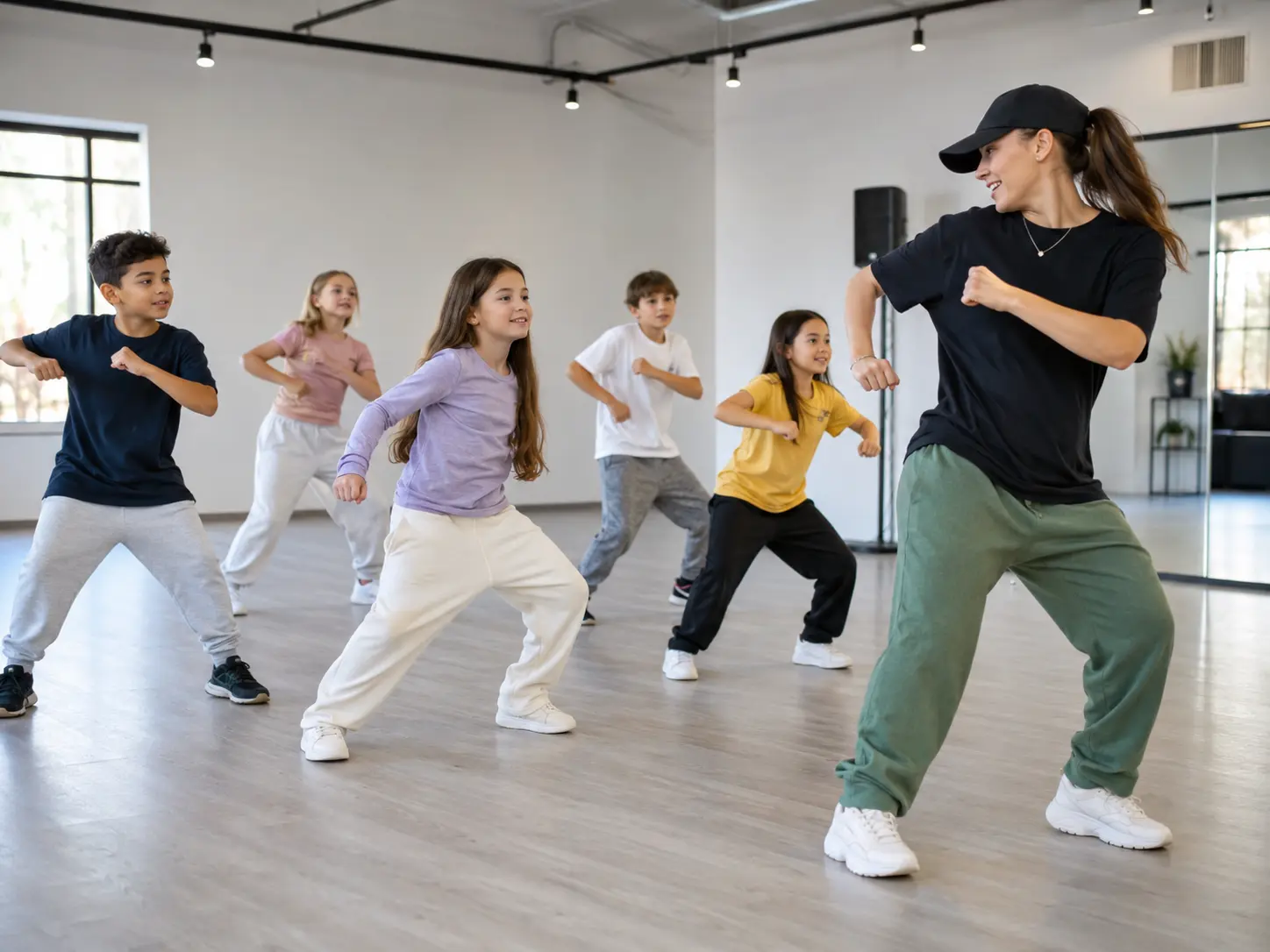
If you have ever wondered what is hip hop dance, it is an energetic and expressive form of dance built around rhythm, groove, musicality, coordination, and individual style. Hip hop can include structured choreography as well as opportunities for dancers to bring their own personality into the movement. For young dancers, beginner classes typically focus on learning how to follow the beat, control the body, remember combinations, and become more comfortable expressing themselves through movement. Parents interested in exploring the style can learn more about hip hop programs at Perform Art Studios, which currently offers Hip Hop programming for young dancers.
What Is Hip Hop Dance in Simple Terms?
Hip hop dance is a broad style of movement that emphasizes rhythm, groove, musical interpretation, and personal expression.
Unlike dance forms built around one fixed technical vocabulary, hip hop can include many different movement influences and approaches. Dancers may learn specific choreography, practice foundational grooves, work on isolations and footwork, or explore freestyle movement.
Music plays an important role. Students learn to listen for beats, accents, rhythm changes, and different qualities within a song and then connect those sounds to movement.
For children, this makes hip hop both structured and creative. They can learn combinations from an instructor while also gradually becoming more comfortable adding personality and expression to the way they move.
Hip Hop Dance History: Where Did It Begin?
The history of hip hop dance is closely connected with the development of hip hop culture in New York City during the 1970s, particularly in communities in the Bronx.
Dance became one of the important forms of expression associated with the growing culture, alongside music, DJing, MCing, and visual art. Breaking developed as a particularly important dance tradition within early hip hop culture, with dancers using footwork, freezes, dynamic movement, and individual style.
As hip hop culture spread, dance continued to develop through parties, communities, performances, competitions, music videos, and eventually dance studios around the world.
It is important to recognize that not every movement now taught under the broad label of “hip hop” originated in exactly the same place or at the same time. Styles such as locking and popping have their own histories, particularly within West Coast funk dance traditions, but they are frequently introduced alongside hip hop and street dance in modern studio training.
Today, hip hop dance continues to evolve as dancers combine foundations, social dances, freestyle, choreography, and new movement influences.
What Are the Main Hip Hop Dance Styles?
There are several hip hop dance styles and related street and funk dance traditions that dancers may encounter. These forms have different histories and should not all be treated as a single style, but many modern studios introduce young dancers to elements from several traditions as part of broader hip hop and street dance training.
| Style | Main Characteristics |
|---|---|
| Breaking | Footwork, floorwork, freezes, dynamic movement, and individual style |
| Popping | Controlled muscle contractions, sharp accents, and visually precise movement |
| Locking | Rhythmic pauses, expressive gestures, and energetic movement |
| Social and Party Dance Foundations | Groove, rhythm, and movement connected directly to music |
| Commercial Hip Hop | Choreography influenced by stage performances, concerts, music videos, and entertainment settings |
What Is Hip Hop Dance Style Like?
So, what is hip hop dance style like when someone actually takes a class?
Although choreography varies by instructor, music, and level, hip hop movement often emphasizes qualities such as:
- groove
- rhythm
- grounded movement
- body isolations
- coordination
- footwork
- musicality
- changes in direction
- changes in level
- personal expression
Movements may feel sharp and accented in one combination and smoother or more relaxed in another.
Dancers also learn that performing hip hop is not simply about copying a sequence of steps. Understanding how the movement relates to the music is an important part of developing the style.
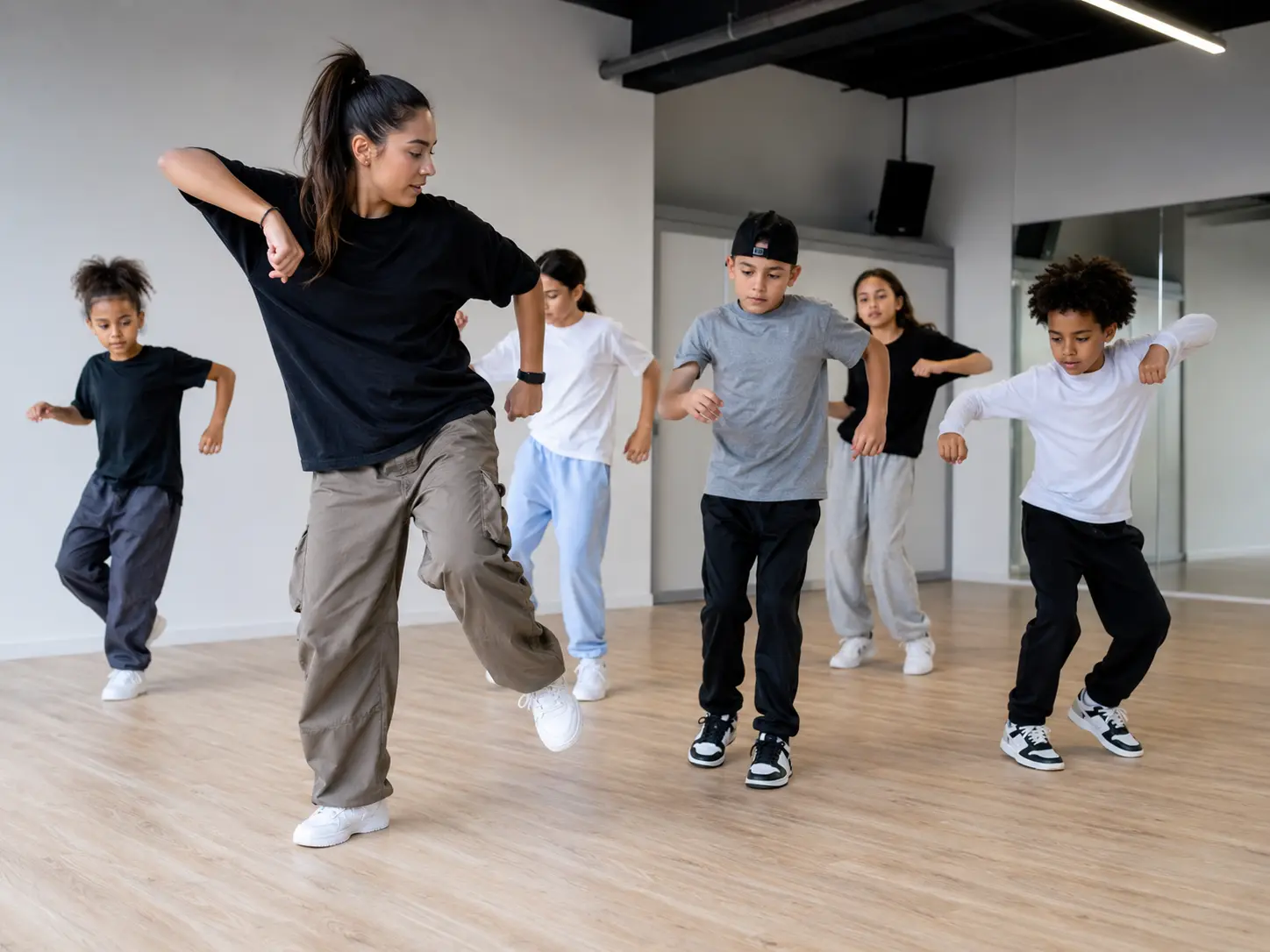
Basic Hip Hop Moves Beginners May Learn
Young beginners usually start with simple movement foundations before moving into longer or more complicated choreography.
Bounce
A bounce introduces dancers to the feeling of moving with the beat rather than simply performing movements on top of the music.
It can help beginners understand timing and develop a more natural sense of groove.
Rock
Rocking movements shift the dancer’s weight in rhythm with the music.
They can help students develop coordination and become more comfortable moving from one side of the body to the other.
Step-Touch Variations
Step-touch patterns are simple enough for beginners but can be changed in many ways through direction, arms, rhythm, and style.
They are often useful for learning how different movements connect together.
Body Isolations
An isolation involves moving one area of the body while keeping other areas relatively controlled.
Beginners may practice isolating the shoulders, chest, head, or hips.
Basic Footwork
Simple footwork patterns help young dancers become more comfortable with weight changes, direction, timing, and coordination.
Short Combinations
Once students become familiar with individual movements, they can begin connecting them into short sequences.
Learning combinations helps dancers practice memory, timing, musicality, and transitions between movements.
What Do Kids Learn in Hip Hop Dance Classes?
Hip hop classes can teach children much more than individual dance moves.
Young dancers may gradually work on:
- rhythm
- coordination
- musicality
- movement memory
- body control
- spatial awareness
- choreography
- performance skills
- freestyle and creativity
- confidence in movement
Students also learn how to watch demonstrations, follow instructions, remember sequences, and move alongside other dancers.
As their experience grows, combinations can become longer and more detailed while students develop a stronger understanding of how movement connects with music.
Benefits of Hip Hop Dance for Kids
The benefits of hip hop dance for kids can extend beyond simply learning choreography.
Hip hop gives children an active and creative environment in which they can develop physical, musical, social, and performance-related skills over time.
Coordination and Body Control
Hip hop frequently requires dancers to coordinate their arms, legs, torso, and direction of movement at the same time.
Students may also need to change levels, shift their weight, or perform isolations while staying connected to the beat.
With practice, these challenges can help young dancers develop greater coordination and control.
Rhythm and Musicality
Music is central to hip hop dance.
Students learn to recognize beats, accents, tempo changes, and different rhythmic patterns.
Over time, they can become more comfortable matching movement to the music rather than simply memorizing steps.
Confidence
Learning choreography and successfully performing movements that initially felt unfamiliar can help children become more comfortable with their abilities.
Classes and performances may also give young dancers opportunities to become more confident moving in front of other people.
Creativity and Self-Expression
Hip hop leaves room for individuality.
Even when students are learning the same choreography, they can gradually explore how energy, attitude, musical interpretation, and movement quality contribute to their own style.
Freestyle activities can provide additional opportunities for creative expression.
Focus and Memory
Learning a dance combination requires attention.
Students need to watch the instructor, remember the sequence, listen to the music, and apply corrections while continuing to move.
As combinations become longer, dancers practice remembering and connecting multiple movements in order.
Social Interaction and Teamwork
Group classes give children opportunities to move alongside other dancers.
They learn about spacing, timing, taking turns, watching the group, and working together during choreography and performances.
Physical Activity
Hip hop can involve continuous movement, footwork, changes in direction, and full-body choreography.
For children who enjoy music and energetic movement, dance can provide an engaging way to stay physically active.
Explore Hip Hop Dance for Young Dancers
Give your dancer an opportunity to develop rhythm, coordination, musicality, confidence, and performance skills through age-appropriate hip hop training.
What Are the Best Shoes for Hip Hop Dance Practice?
Parents often ask what are the best shoes for hip hop dance practice, but there is no single shoe that works perfectly for every dancer or class.
In general, hip hop shoes should be:
- comfortable
- secure on the foot
- supportive enough for movement
- flexible enough for dancing
- suitable for the studio floor
- clean and in good condition
Families should always check the class dress code before buying shoes because footwear requirements can vary between studios and programs.
Shoes should also fit properly. A shoe that slips, feels excessively tight, or interferes with movement is not a good choice simply because it looks appropriate for hip hop.
What Should Kids Wear to Hip Hop Class?
Hip hop clothing should allow children to move comfortably.
Depending on the studio’s dress code, appropriate clothing might include:
- comfortable joggers
- sweatpants
- athletic pants or shorts
- T-shirts
- breathable tops
- appropriate indoor sneakers
Clothing should allow enough freedom for bending, stepping, jumping, and changing levels without constantly needing adjustment.
Accessories that interfere with movement should generally be avoided, and long hair may need to be secured depending on the activity.
Is Hip Hop Dance Good for Beginners?
Yes. Children do not need previous dance experience before beginning an age-appropriate beginner hip hop class.
Beginners are there to learn.
A suitable introductory class can gradually teach students:
- how to follow the beat
- basic grooves
- simple footwork
- body isolations
- introductory choreography
- movement terminology
- how to remember combinations
Some children may pick up choreography quickly, while others need more repetition. Both are normal.
The goal at the beginning is not to perform every movement perfectly but to become familiar with the foundations and gradually build confidence and control.
Is Hip Hop Dance Only About Choreography?
No. Choreography is an important part of many modern hip hop classes, but hip hop dance can also involve groove, foundations, social movement, musicality, and freestyle.
Choreography teaches dancers how to remember and perform a specific sequence.
Freestyle gives dancers an opportunity to make movement choices in the moment and respond more independently to the music.
Both can contribute to a young dancer’s development in different ways.
Hip Hop Dance at Perform Art Studios
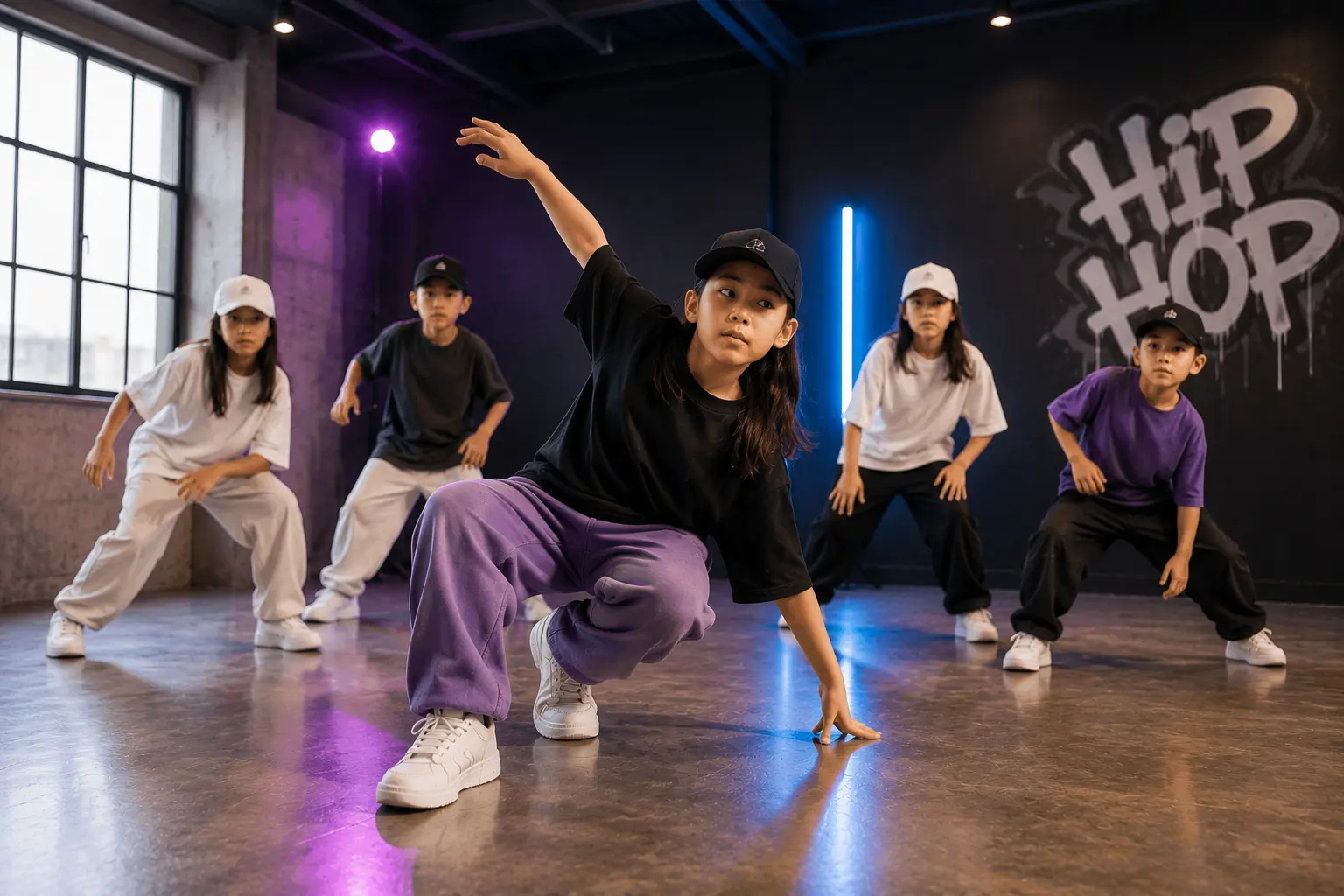
Perform Art Studios currently offers Hip Hop for dancers ages 5-18, alongside recreational and more advanced dance opportunities. Its Hip Hop program incorporates choreography, freestyle, and influences including popping, locking, and breaking, while the studio also offers a Boys Only Hip Hop & Breakdancing option.
Young dancers can develop their skills progressively while learning how rhythm, movement, choreography, and performance work together.
The goal is not for children to arrive already knowing how to dance. Age- and level-appropriate instruction gives them a place to begin and opportunities to develop their abilities through regular practice.
Start Exploring Hip Hop Dance
Explore Hip Hop at Perform Art Studios and find a program that matches your dancer’s age, experience, and interests.
Conclusion
So, what is hip hop dance? It is an energetic and expressive approach to dance that brings together rhythm, groove, musicality, coordination, choreography, and individual style. Its history is closely connected with hip hop culture, while modern training may also introduce dancers to related street and funk dance traditions with their own distinct origins. For children, hip hop can provide an engaging way to develop movement skills, musical awareness, creativity, focus, and confidence while enjoying music and dancing with others. Perform Art Studios gives young dancers opportunities to explore these skills and continue developing their dance training.
Frequently Asked Questions
Hip hop dance is a broad and expressive approach to dance that emphasizes rhythm, groove, musicality, coordination, and individual style. It can include structured choreography, foundational movements, social dances, and freestyle.
Hip hop dance is closely connected with hip hop culture, which developed in New York City during the 1970s, particularly in the Bronx. Breaking became one of the important dance traditions associated with the early culture.
Dancers may encounter breaking as well as related street and funk styles such as popping and locking, along with social dance foundations, freestyle, and commercial hip hop choreography. These traditions have different histories even though they are often taught together in modern studio settings.
Hip hop can be suitable for children when classes are designed for their age and experience level. Beginner classes can introduce rhythm, coordination, choreography, musicality, creativity, and performance skills gradually.
Hip hop dance can help children develop coordination, rhythm, body control, musicality, movement memory, focus, creativity, confidence, and experience working with other dancers.
Comfortable, secure sneakers that allow movement and are appropriate for the studio floor are generally a good choice. Families should follow the footwear requirements provided by their specific dance studio.
Children should generally wear comfortable clothing that allows unrestricted movement along with the footwear required by the studio. Joggers, athletic clothing, and T-shirts are common options.
Yes. Beginner hip hop classes are designed to introduce basic rhythm, grooves, footwork, isolations, and choreography gradually, so previous dance experience is not required.