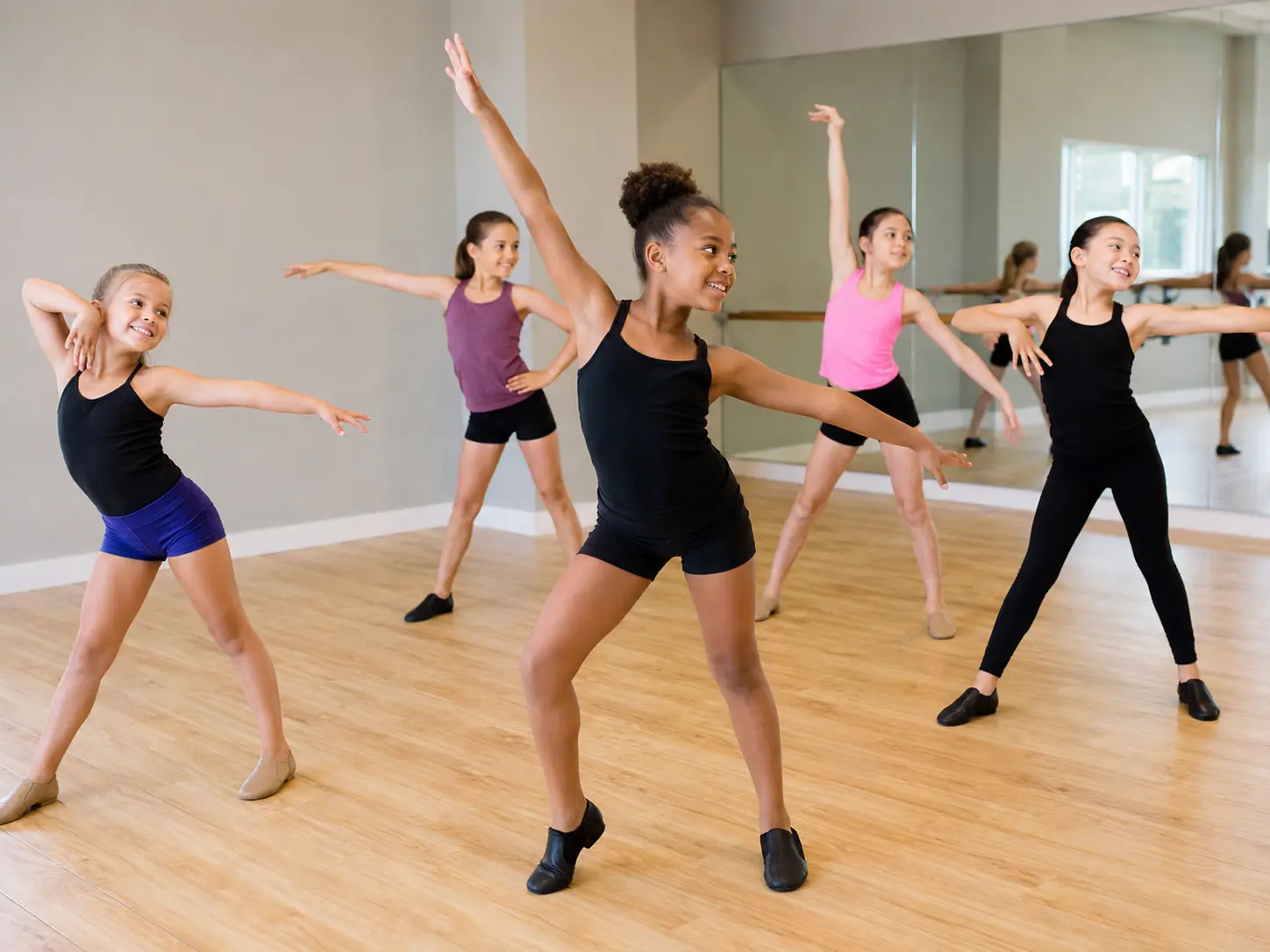
Jazz dance is energetic, expressive, and closely connected to music. It gives young dancers opportunities to combine technique with rhythm, personality, and performance while gradually developing coordination and control. Because jazz can range from upbeat and powerful to smooth and theatrical, children can experience different kinds of choreography as their skills grow. Parents interested in exploring the style can learn more about jazz programs at Perform Art Studios.
What Is Jazz Dance in Simple Terms?
So, what is jazz dance in practical terms?
Jazz is a dance style that combines technical movement with rhythm, musicality, coordination, and expression. Dancers learn how to control their bodies while responding to different beats, accents, tempos, and qualities in music.
Jazz training can include:
- turns
- kicks
- jumps and leaps
- isolations
- travelling movements
- footwork
- choreography
- expressive performance
Although students learn structured combinations, jazz also leaves room for individuality. Two dancers can perform the same choreography while bringing different energy, expression, and movement quality to it.
For young dancers, this balance between technique and personality is an important part of learning the style.
Jazz Dance History: Where Did It Begin?
The history of jazz dance has important roots in African American social and vernacular dance traditions in the United States.
Rhythm, improvisation, individuality, and a close relationship with music were central to many of the dance traditions that contributed to the development of jazz.
As jazz music and dance became more widely visible during the 20th century, jazz movement also became increasingly present in theatre, film, stage productions, and popular entertainment.
Theatrical jazz continued to develop over time, incorporating new techniques and performance influences. Broadway, musical theatre, film, television, contemporary dance, and commercial performance have all contributed to the many forms of jazz seen today.
This history is one reason modern jazz does not have one single appearance. The style has continued to evolve while maintaining a strong emphasis on rhythm, musical interpretation, movement quality, and individual expression.
What Is Jazz Dance Style Like?
Jazz dance style can look very different depending on the choreography, music, and performance setting.
A jazz routine might be sharp and energetic, smooth and controlled, playful, dramatic, or theatrical.
Common characteristics include:
- energetic movement
- rhythm and musicality
- body isolations
- turns
- kicks
- jumps and leaps
- changes in level
- changes in direction
- sharp or accented movements
- expressive upper-body movement
- dynamic changes in energy
- individual performance style
Jazz dancers are generally encouraged to do more than simply remember the correct sequence of steps.
Timing, energy, facial expression, focus, and musical interpretation can all affect how choreography looks and feels.
This emphasis on performance gives dancers opportunities to develop their own presence while still working within structured technique.
Basic Jazz Dance Moves Beginners May Learn
There are many jazz dance moves, but beginners usually start with foundational movements before progressing to more demanding turns, kicks, and leaps.
Jazz Square
A jazz square is a four-step pattern where the dancer crosses and steps in different directions to create a square-like pathway.
It can help beginners practise rhythm, coordination, and weight transfer.
Chassé
A chassé is a travelling movement in which one foot appears to “chase” the other.
It can be used on its own or as a transition into jumps, turns, and other travelling movements.
Pivot Turn
A pivot turn involves rotating the body while transferring weight between the feet to change direction.
Beginner versions help dancers become more comfortable with turning, balance, and directional awareness.
Jazz Walks
Jazz walks allow dancers to work on rhythm, posture, direction, and performance quality while travelling across the floor.
They may look simple, but the way a dancer uses timing, energy, and style can change the character of the movement considerably.
Pas de Bourrée
A pas de bourrée is a quick three-step movement used in several dance forms, including jazz.
It is often used to connect one part of a combination to another.
Basic Leaps and Jumps
Jazz is known for dynamic jumps and leaps, but beginners usually start with simpler versions while developing strength, coordination, alignment, and control.
The goal is not simply to jump higher. Safe takeoff, controlled landing, and appropriate technique are also important.
Isolations
An isolation involves moving one part of the body while keeping other areas relatively controlled.
Beginners may practise isolating the shoulders, chest, head, or hips to develop body awareness and greater control over movement.
What Do Kids Learn in Jazz Dance Classes?
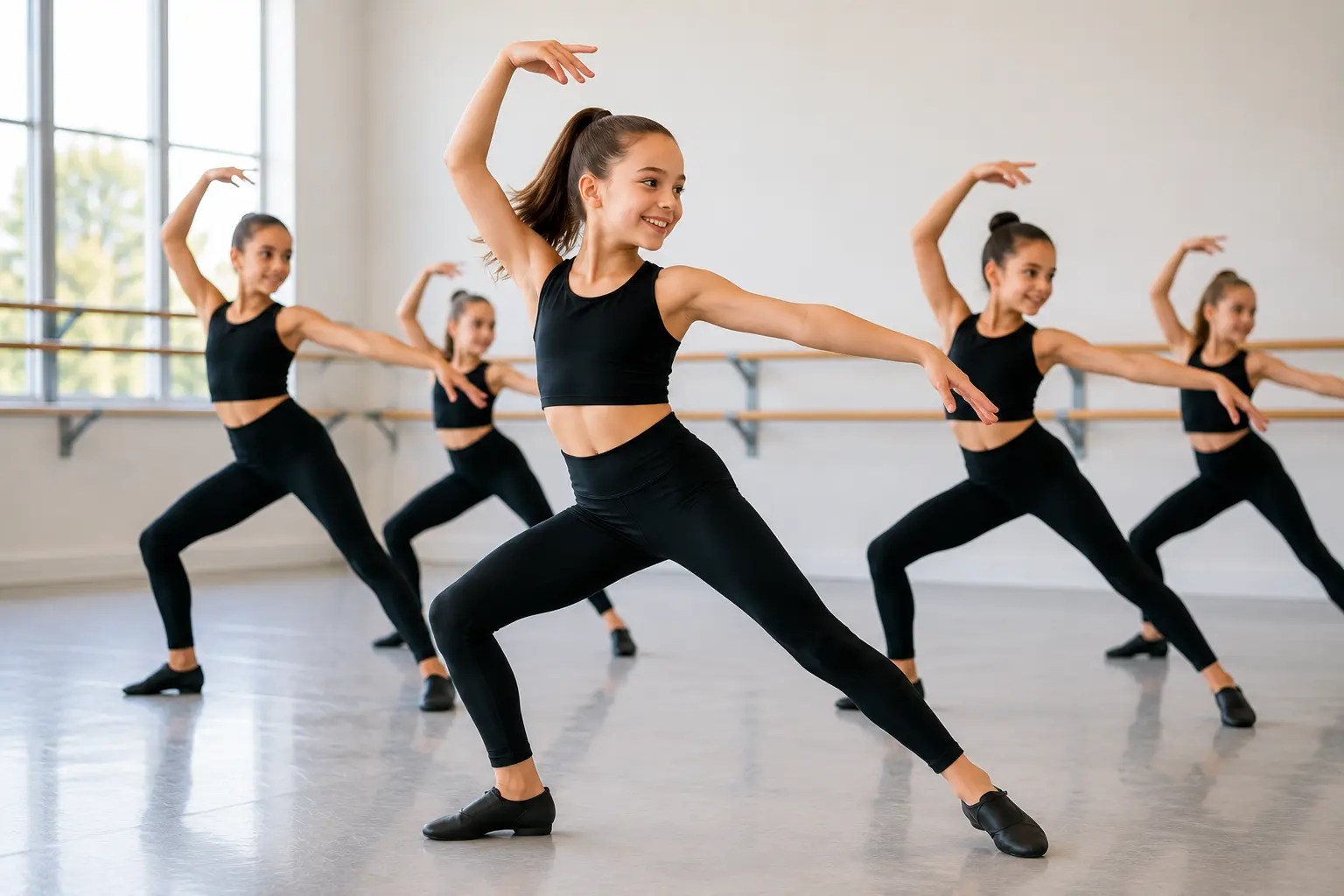
Jazz classes give children opportunities to develop several dance skills together rather than focusing only on individual steps.
Young dancers may work on:
- coordination
- flexibility
- musicality
- movement memory
- technique
- spatial awareness
- balance
- choreography
- performance skills
- self-expression
Students also learn how to watch demonstrations, follow instructions, remember sequences, apply corrections, and move safely alongside other dancers.
As their experience grows, choreography can gradually become longer and more detailed. Students may begin working with more complex timing, transitions, turns, jumps, and expressive qualities.
The goal is progressive development rather than expecting beginners to master advanced movement immediately.
Benefits of Jazz Dance for Kids
The benefits of jazz dance for kids can extend beyond simply learning a dance routine.
Jazz provides a structured yet expressive environment in which young dancers can develop physical, musical, creative, and performance-related skills over time.
Coordination and Body Control
Jazz choreography often asks dancers to coordinate different parts of the body at the same time.
The legs may be travelling in one direction while the arms follow another pattern, all while the dancer maintains timing and posture.
Practising these combinations can help young dancers develop greater coordination and awareness of how their bodies move.
Musicality and Rhythm
Music is central to jazz.
Students learn to notice:
- Beats
- Accents
- Tempo
- Phrasing
- Pauses
- Changes in musical energy
They then practise connecting those details to movement.
This can help dancers understand that choreography is not simply a sequence of steps. It is also a response to music.
Flexibility and Movement Skills
Jazz can involve kicks, stretches, travelling movements, turns, jumps, and changes in body position.
Appropriate training can gradually help dancers improve mobility and range of movement while developing the technique needed to use those skills with control.
Beginners do not need exceptional flexibility before starting.
Confidence
Learning unfamiliar movements, remembering choreography, and eventually performing combinations can help young dancers become more comfortable with their abilities.
Confidence develops differently for every child, so progress should not depend on comparing one dancer with another.
Focus and Memory
Jazz combinations require students to remember the order of movements while listening to music and responding to instructions.
As choreography becomes longer, dancers practise maintaining focus and recalling increasingly detailed sequences.
Creative Expression
Jazz can communicate many different moods and characters.
One routine may feel playful and energetic, while another may require precision, confidence, drama, or a completely different performance quality.
This variety gives children opportunities to explore how movement can communicate personality and emotion.
Performance Skills
Performance is an important element of jazz.
Students may gradually learn how factors such as:
- facial expression
- focus
- energy
- timing
- projection
- movement quality
affect the way choreography is presented.
Explore Jazz Programs for Young Dancers
Help your dancer develop coordination, musicality, expression, and performance skills through age-appropriate jazz training.
What Are the Best Types of Shoes for Jazz Dance Beginners?
Parents may wonder what are the best types of shoes for jazz dance beginners, but the right footwear can depend on the class and studio requirements.
Jazz shoes are generally lightweight and flexible, allowing dancers to move across the floor, point their feet, and turn comfortably.
Two common types include:
Full-Sole Jazz Shoes
A full-sole jazz shoe has a continuous sole running beneath the length of the foot.
This design provides a more continuous base beneath the foot and may be used for certain beginner programs.
Split-Sole Jazz Shoes
A split-sole jazz shoe has separate sole sections beneath the front and heel of the foot.
This design typically allows greater flexibility through the arch.
Neither style is automatically the best choice for every beginner.
The dancer’s age, class level, studio requirements, and performance needs can all affect which shoe is appropriate. Parents should check the studio dress code before purchasing jazz shoes, including any requirements for style or colour.
What Should Kids Wear to Jazz Class?
Children should wear dance clothing that allows them to move comfortably while giving their instructor a clear enough view of posture and alignment.
Depending on the class requirements, suitable options may include:
- leotards
- fitted tops
- leggings
- jazz pants
- dance shorts
- flexible dancewear
- appropriate jazz shoes
Clothing should allow enough freedom for stretching, kicking, turning, jumping, and travelling across the floor without needing constant adjustment.
Long hair should also be secured when necessary so it does not interfere with movement or visibility during class.
Is Jazz Dance Good for Beginners?
Yes. Children do not need previous jazz experience to join an age-appropriate beginner class.
Beginner training is designed to introduce foundations gradually.
Students may start with:
- rhythm
- basic coordination
- isolations
- simple turns
- travelling steps
- introductory jumps
- short combinations
More demanding movements can be introduced as dancers develop the necessary technique and control.
Children also learn at different speeds. One dancer may remember choreography quickly but need more time with balance, while another may feel comfortable technically but take longer to develop confidence in performance.
Repetition is a normal part of dance training. Progress usually comes from practising foundations consistently rather than mastering every movement immediately.
How Is Jazz Different From Ballet?
Jazz and ballet share some technical foundations, but they have different movement qualities and performance traditions.
Ballet generally follows a more formalized technical structure, with particular emphasis on alignment, turnout, defined positions, controlled lines, and a specific movement vocabulary.
Jazz can be more stylistically varied and may place greater emphasis on rhythm, isolations, grounded movement, dynamic changes, individual expression, and different forms of popular or theatrical music.
However, the two styles are not completely separate.
Skills developed through ballet, such as posture, balance, controlled turns, foot articulation, and alignment, can also support jazz training.
At the same time, previous ballet experience is not required for a child to begin jazz.
Parents interested in learning more about the other style can read What Is Ballet?
Jazz Dance at Perform Art Studios
Perform Art Studios offers jazz programming for young dancers ages 5-18.
Jazz training gives students opportunities to work on coordination, flexibility, musicality, technique, self-expression, and performance while developing their abilities progressively.
The style also allows young dancers to explore individuality and different ways of responding to music and choreography.
Beginners are not expected to arrive already knowing turns, kicks, leaps, or jazz terminology. Age- and level-appropriate instruction provides a starting point from which students can gradually build technique and confidence.
Start Exploring Jazz Dance
Explore jazz programs at Perform Art Studios and find a class suited to your dancer’s age and experience.
Conclusion
So, what is jazz dance? It is an energetic and expressive dance style that combines technique, rhythm, musicality, coordination, dynamic movement, and individual performance. Its history is connected to African American dance traditions and has continued to evolve through social dance, theatre, film, popular entertainment, and modern studio training. For children, jazz provides opportunities to explore choreography while developing movement skills, musical awareness, creativity, focus, and confidence. Perform Art Studios gives young dancers a place to discover jazz and continue developing their skills through age-appropriate training.
Frequently Asked Questions
Jazz dance is an energetic and expressive form of dance that combines technique, rhythm, musicality, dynamic movement, and individual performance style. Modern jazz can include influences from theatrical, contemporary, and commercial dance.
Jazz dance has important roots in African American social and vernacular dance traditions in the United States. It developed alongside jazz music and later expanded into theatre, film, stage performance, and modern studio training.
Jazz can be energetic, sharp, rhythmic, smooth, theatrical, or expressive depending on the music and choreography. Common characteristics include isolations, turns, kicks, jumps, musicality, dynamic changes, and individual performance style.
Beginner jazz dance moves may include jazz squares, chassés, pivot turns, jazz walks, pas de bourrée, body isolations, introductory kicks, jumps, and basic leaps.
Jazz dance can help children develop coordination, body control, musicality, movement memory, flexibility, focus, confidence, creative expression, and performance skills.
Beginners often wear lightweight and flexible jazz shoes. Both full-sole and split-sole designs are available, but parents should follow the footwear requirements of their child’s specific dance program.
Yes. Beginner jazz classes introduce foundational movements and technique gradually, so previous jazz experience is generally not necessary.
Ballet generally follows a more formalized technical structure, while jazz is often more rhythmic, stylistically varied, dynamic, and expressive. The two styles share some technical foundations, but children do not need ballet experience before beginning jazz.